Integrated HCA Breast Cell Atlas
Reference V1 Atlas from the HCA Breast Biological Network gives insights into cancer risk and potential therapies.
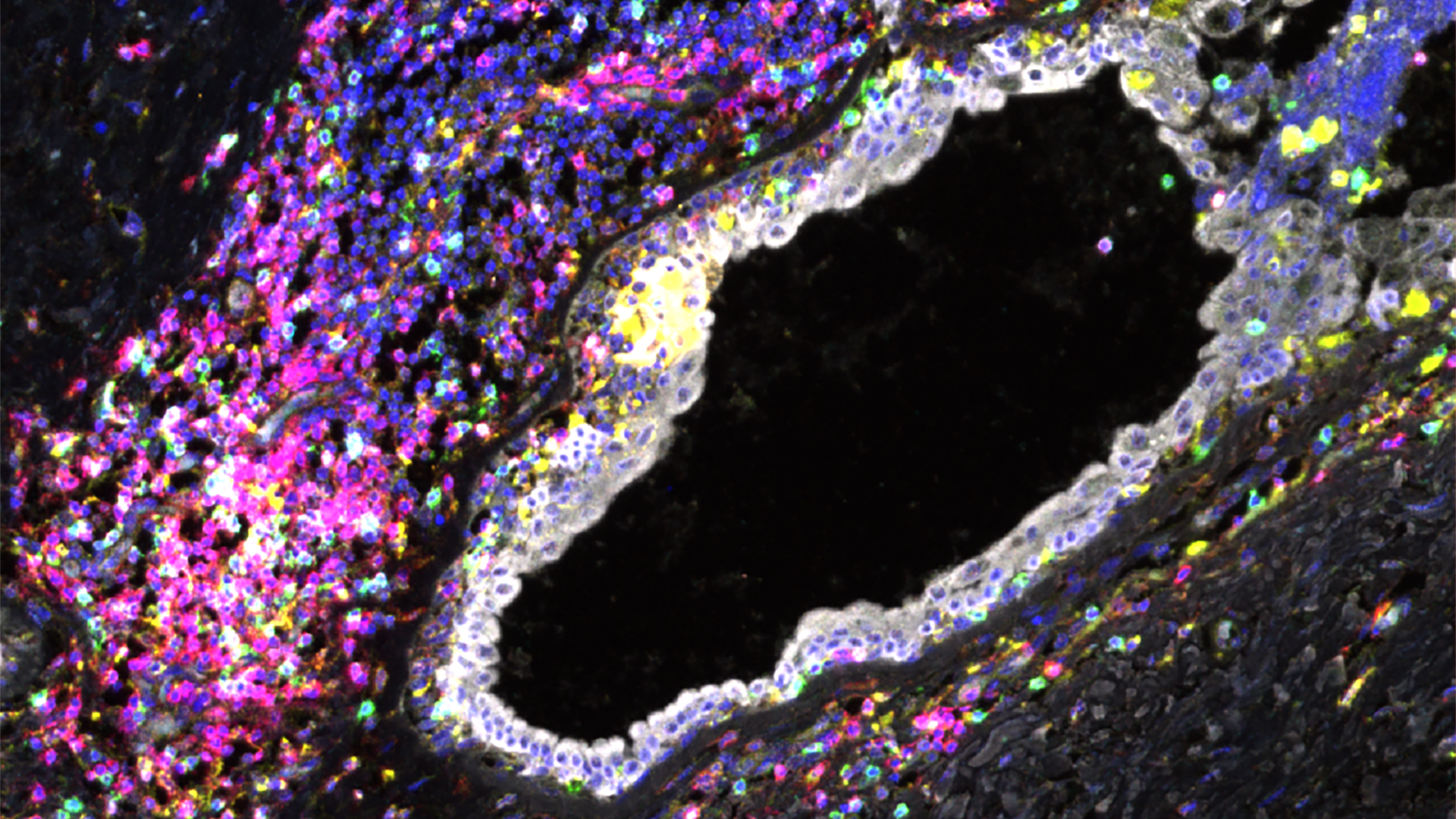
The HCA Breast Biological Network has produced a high quality integrated HCA Breast Cell Atlas, which is now available on the HCA Data Portal. Harmonising more than 2.1 million cells from 7 studies, this atlas of healthy breast tissue helps to understand the basic biology of the breast as well as being a resource to study disease.
The Version 1 HCA Breast Cell Atlas integrated single-cell data from 287 donors, including individuals with BRCA1 and BRCA2 mutations, who had a higher risk for developing breast cancer.
Walid Khaled, an HCA Breast Biological Network Coordinator, said: ‘Our Atlas has provided an unprecedented cellular and molecular map of the breast, capturing differences across age, having children, and changing hormonal states. The integrated Breast Cell Atlas has enabled us to identify cell states that were not accessible without single-cell resolution, clarified lines of cell specialisation and has already revealed potential drug targets against breast cancer.”
The V1 HCA Breast Cell Atlas is based on an earlier version reported in Nature1. That atlas allowed the team to discover that healthy tissue in women carrying the BRCA1/2 mutation harboured an exhausted immune system, previously seen in patients with late-stage breast cancer. That discovery is underpinning efforts examining preventative therapies for BRCA mutation carriers and has led to a patent application focused on targeting these immune cells.
This early version integrated breast atlas was also used as the reference dataset for the BC-APPS1 clinical trial2. This trial assessed anti-progestin therapy on markers of breast cancer risk, and showed potential for preventive therapy in premenopausal women at increased breast cancer risk.
To create the V1 HCA Breast Cell Atlas, the team tested additional integration methods and parameters used in the early version of the atlas. The team also harmonised metadata from the tissue donors, such as their age, number of children, BRCA1/2 status and cancer history, as well as technical variations, before manually annotating cells.
A rigorous approval process from the HCA Organising Committee ensures that HCA integrated Atlases are of the highest quality. V1 HCA Atlases also include multiple landmark datasets.
Kai Kessenbrock, an HCA Breast Biological Network Coordinator, said: “As a foundation for the integrated V1 HCA Breast Cell Atlas, we created key landmark breast cell datasets that have already impacted disease biology. For example, one study identified critical somatic changes in BRCA1 mutation carriers that precede tumour formation, and likely contributes to their increased cancer risk3.”
Nicholas Navin, an HCA Breast Biological Network Coordinator, said: “ Another landmark study led to major discoveries including new insights into the biology of triple-negative breast cancer tumours and characteristics associated with a good response to chemotherapy4. Our breast cell atlas studies serve as important references for understanding diseases such as breast cancer.”
The HCA Breast Biological Network is coordinated by Kai Kessenbrock, Nicholas Navin and Walid Khaled. The team is already working to create a V2 HCA Breast Cell Atlas.
For further information, please visit the HCA Breast Biological Network at the HCA Data Portal.
Funding
This work has been supported by a number of funders, including Biohub through a grant from the Chan Zuckerberg Initiative DAF, an advised fund of the Silicon Valley Community Foundation.
References
- Austin Reed et al. (2024) Nature Genetics
- Bruno M. Simões et al. (2025) Nature
- Kevin Nee et al. (2023) Nature Genetics
- Yun Yan et al. (2026) Nature