
HCA Spatial Cell Segmentation Hackathon 18-19 May
Leaders came together to improve computational methods for spatial integration into cell atlases.
The next phase of the Human Cell Atlas - HCA 2.0 - will involve mapping the human body spatially, at cellular resolution. However, further development of computational methods is needed to process and integrate spatial transcriptomics into the next generation of cell atlases.
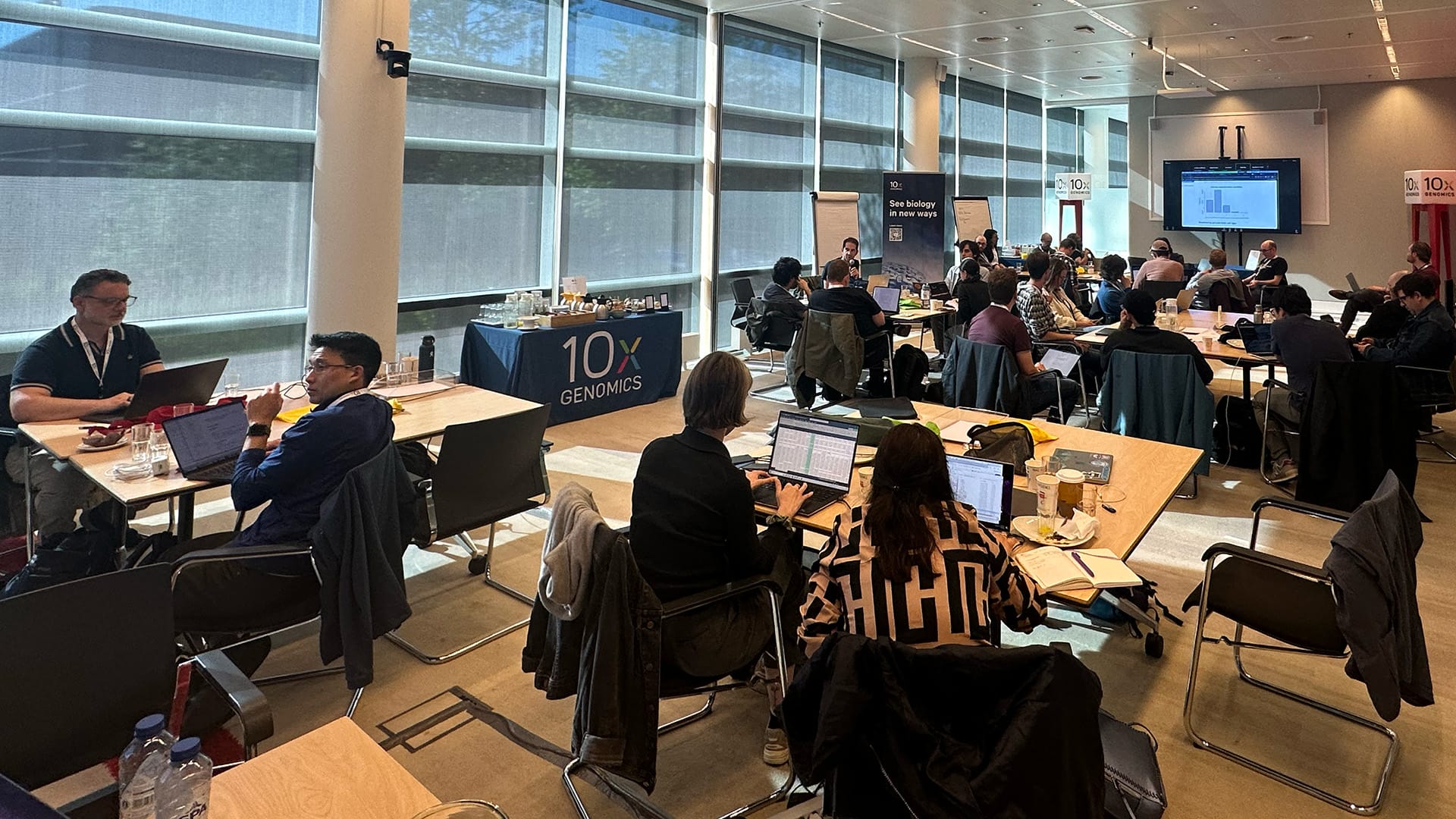
On 18-19 May, leaders in spatial transcriptomics cell segmentation came together at the HCA Spatial Cell Segmentation Hackathon, held at the 10x Genomics EMEA headquarters in Leiden, Netherlands.
The Hackathon was organized by members of the HCA Analysis Working Group and the HCA 2.0 Computational Task Force, which have been tasked with identifying key computational needs for the analysis of large-scale spatial transcriptomics data in HCA 2.0. Discussions included how to benchmark available computational methods and identify top-performing pipelines.
Gary Bader, HCA Analysis Working Group co-chair, said: ‘Cell segmentation is the process of identifying and separating individual cells within a spatial transcriptomics image and assigning transcripts to them. Achieving high accuracy in this process is a major challenge and we need a coordinated effort to solve it, to facilitate the increased use of spatial transcriptomics platforms by research groups to support discovery in the next phase of the Human Cell Atlas project.’
In-person and virtual attendees came from around the world. HCA researchers were joined by representatives from event sponsors 10x Genomics, Vizgen, and Bioturing, as well as HCA Industry Partnership Program members Johnson & Johnson and GSK.
The organizing team will continue meeting regularly online to maintain momentum and are planning additional activities in the months ahead.
Thanks to the organizers and sponsors of this event including 10x Genomics for hosting us; Vizgen and Bioturing for travel support; and AWS for computational support.
Further events will be planned to use the breadth of expertise in the community and bring people together to tackle the many technical challenges we face. The results of these will inform HCA standards, analysis approaches and policy and help the whole single cell community.