Celebrating the first 10 years of the Human Cell Atlas
Building the community to build the Atlas: Reflections on our achievements and future, with HCA Co-Founders Sarah Teichmann and Aviv Regev, and new Co-Chairs Muzlifah Haniffa and Alexandra-Chloé Villani.
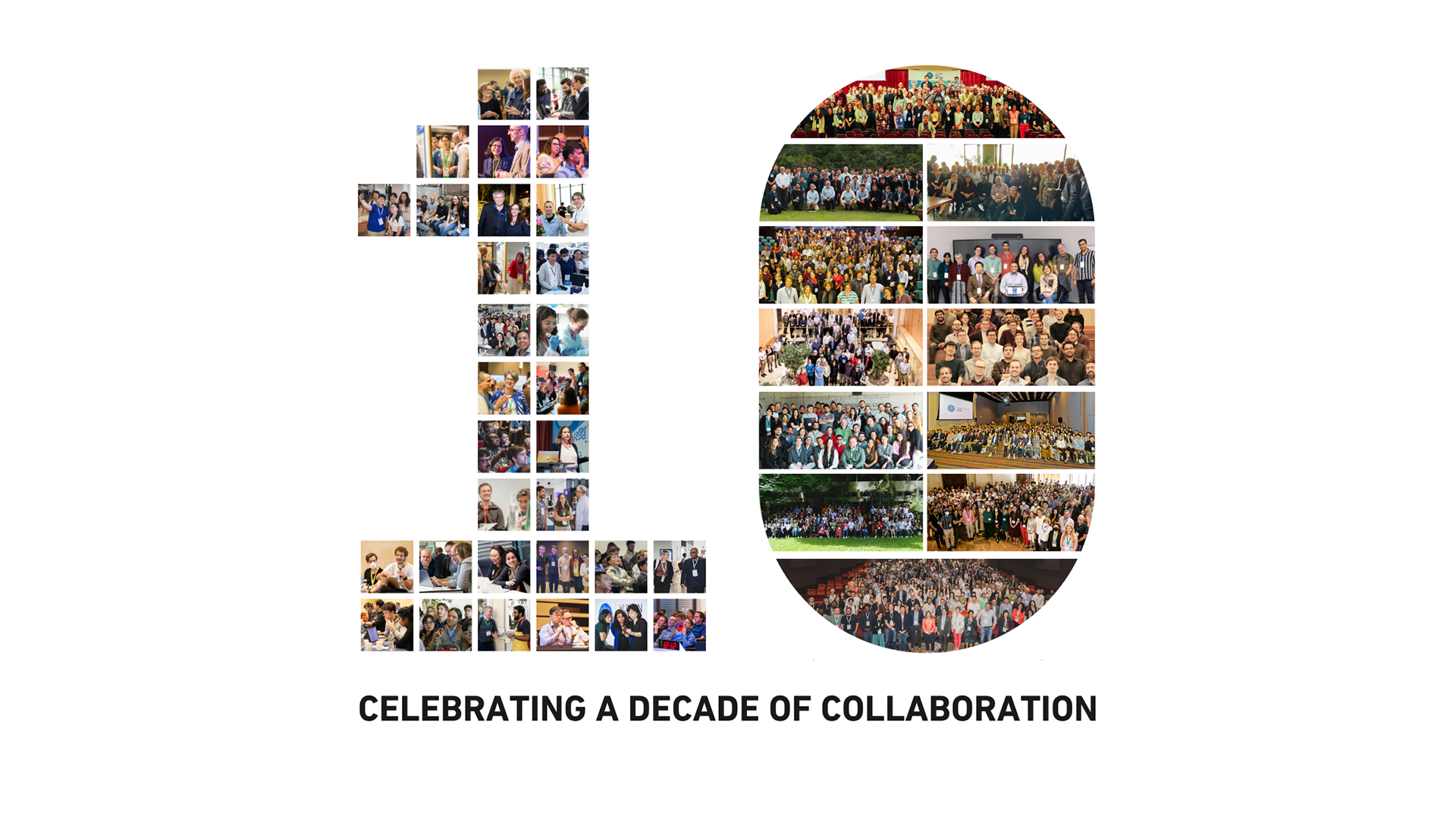
Ten years ago this week there was a tangible buzz of excitement surrounding the launch meeting of the Human Cell Atlas (HCA) initiative. On 13-14 October 2016, nearly 100 scientists from around the world gathered at the Wellcome Trust in London to create one of the largest global projects of its kind: to map every cell type in the human body.
HCA Co-Founders Aviv Regev (then at the Broad Institute of MIT and Harvard) and Sarah Teichmann (then at the Wellcome Sanger Institute) had brought together 93 experts to discuss an unprecedented opportunity to transform science. The vision was to apply novel techniques in single-cell and spatial genomics to create comprehensive reference maps of all human cells—the fundamental units of life—as a basis for both understanding human health and diagnosing, monitoring, and treating disease.
The enthusiasm at the launch meeting was palpable. The HCA Organizing Committee (OC), the international decision-making body of the HCA, was formed over the first lunch break with Aviv and Sarah being elected on the spot as the initial Co-Chairs. Yet the participants also raised many questions on how to achieve this enormous goal, including which organs and systems to start with and which methods would ensure the best quality of data.
Sarah Teichmann, Co-Founder of HCA, and now Chair in Stem Cell Medicine at the University of Cambridge, said: “We wanted to create the HCA as a basis for medicine for the next century. The timing for the initiative was right, with single cell and spatial genomics advances as the catalyst technologies that allowed us to embark on that quest.”
The year following the Launch Meeting was spent planning how to create the HCA, with discussions between the OC, researchers, funders and the single-cell and spatial genomics community. This planning phase culminated in a 100-page White Paper in Oct 2017 with extensive details of what would be needed and a “manifesto” written by the meeting participants and others.
Aviv Regev, Co-Founder of HCA, and now Global Head and Executive Vice President of Genentech Research and Early Development, said: “We laid out our bold vision in our manifesto and an achievable roadmap in the White Paper to create an integrated foundational resource from scientists around the world, with the goal of contributing to transforming both basic science and medicine. We said we’d try to map every cell type, include new lab technologies, ML algorithms and computational tools, and build HCA as an open global network from the start.”
A decade later, the first draft Human Cell Atlas of healthy tissues is now within sight, with over a dozen individual tissue Atlases already endorsed by the HCA Organizing Committee and a coordinated release of HCA Atlases, methods and supporting studies being prepared for publication in 2027. This major release will be akin to the publication of the first draft of the Human Genome Project, which took 13 years to map and sequence the human genetic blueprint. Meanwhile, ambitious plans for the next decade of HCA are already underway.
Community Approach
From the start the HCA was a grass-roots collaboration, between researchers and funders, across disciplines, sectors, institutes, and countries. The scale of the mission was too large for any individual group, institute or even country; the vision was for a global consortium, creating equitable, open and representative reference maps of our cells to transform understanding of biology and revolutionise healthcare worldwide.
Sarah Teichmann added: “The HCA was a new kind of scientific collaboration in biology — a global network built on an open membership model, in which the community of people and the process of building the Atlas are inseparable. Through a balance of scientific leadership and grass roots membership, the community has worked effectively across disciplines, sharing data, tools, and biological expertise.”
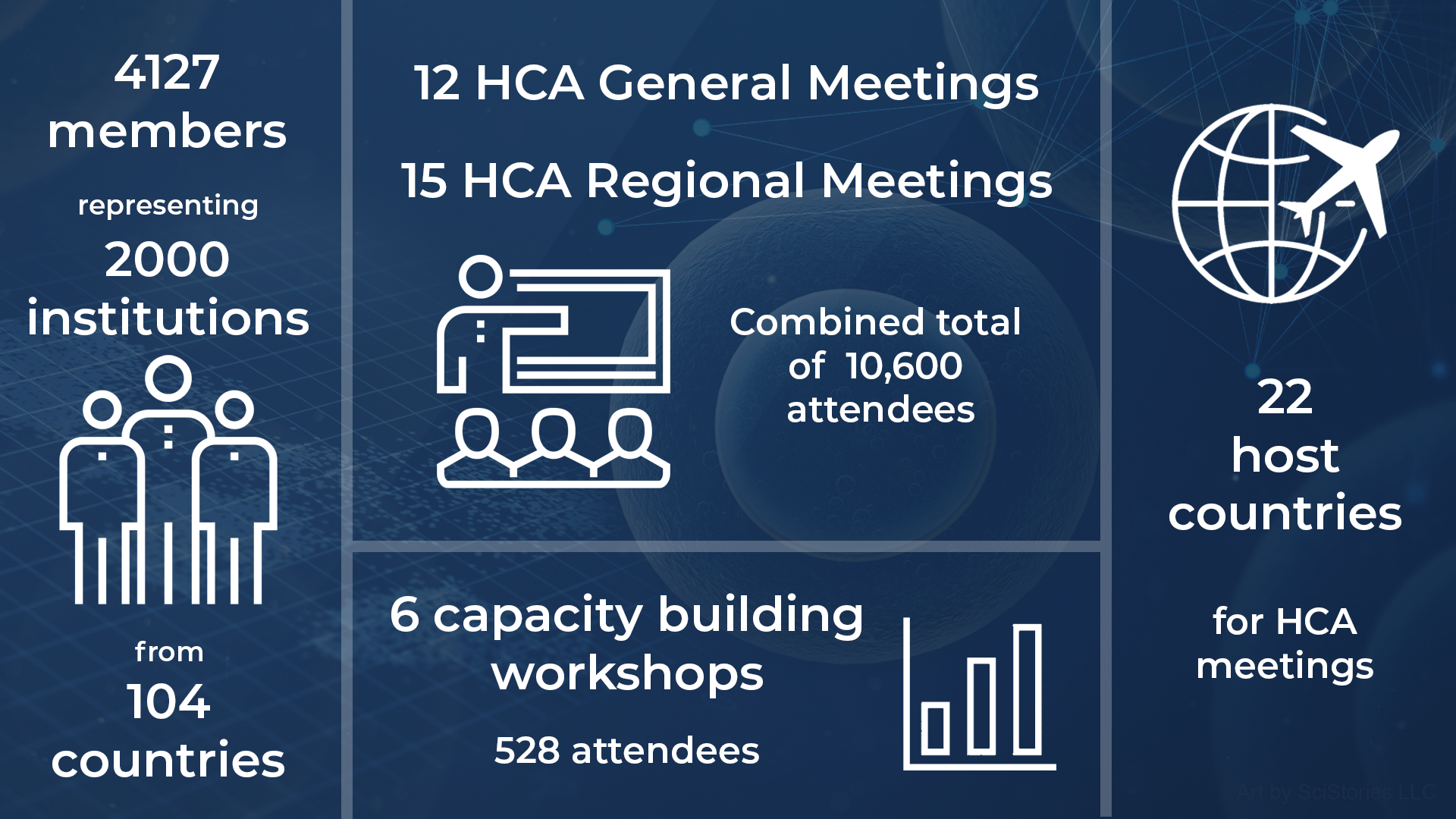
HCA has hosted major meetings and capacity building workshops in host countries worldwide, to share knowledge and build communities and scientific capacity. An HCA Executive Office was established early in the project to support the growing community and Atlas building, including helping to coordinate meetings, groups, fundraising and data management.
Muzlifah (Muzz) Haniffa, new Co-Chair of the HCA Organizing Committee and Deputy Director of the Wellcome Sanger Institute, said: “HCA brings a diverse group of experts together around a shared purpose. Our shared experiences, both successes and challenges, allow us to work as one community.”
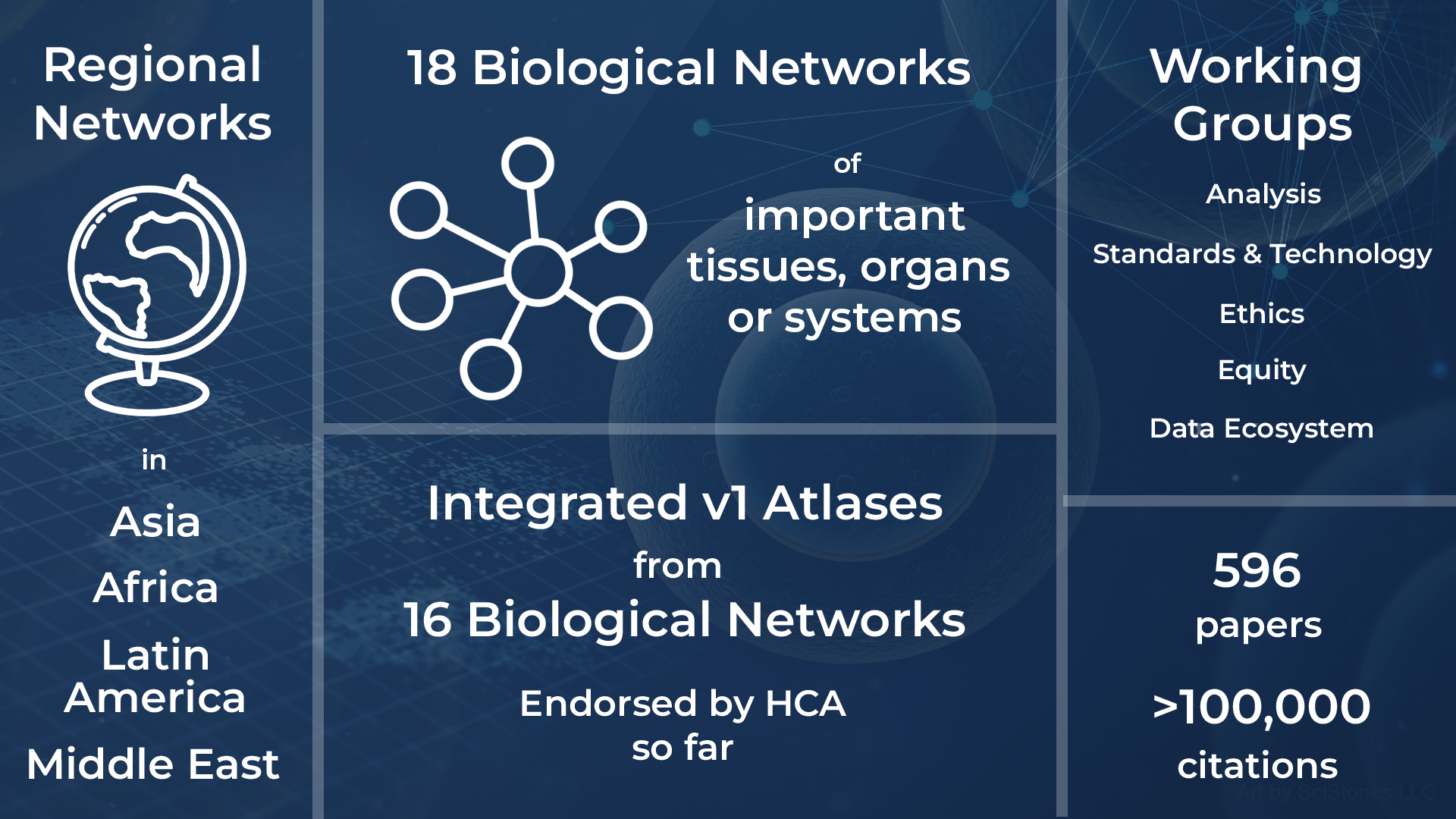
There are now more than 4,100 members of the HCA community, across 104 countries, with Regional Networks of researchers in Asia, Africa, Latin America and the Middle East working towards creating an equitable map of all human cells. These Networks ensure that data, research and knowledge from the global community are incorporated into the Atlas.
Alexandra-Chloé Villani, new Co-Chair of the HCA Organizing Committee, Institute Member at the Broad Institute and Assistant Professor of Medicine at Harvard Medical School, said: “Building the HCA has been an experiment in itself. There was no blueprint for turning such an ambitious global scientific vision into reality. Over the past decade, we have had to continuously learn, adapt, and innovate, not only scientifically, but also in how we organize and coordinate our efforts. The lessons we have learned, and the foundations we have built, will be invaluable as we embark on an even more ambitious next chapter.”
Creating the Frameworks for Atlas-Building
As laid out in the White Paper, HCA community members organised themselves into Working Groups to guide the initiative on computational analysis, standards & technology, ethical frameworks, ensuring equitable research participation, engagement, and benefit, and coordinating the data ecosystem.
Over time, experts in different areas of the body came together to create HCA Biological Networks of key tissues, organs or systems, as planned in the White Paper. The HCA Lung Biological Network accelerated in 2020, hastened by researchers' response to understand transmission and immune reactions in the COVID-19 pandemic to inform clinical care. Aided in part by previously funded tissue-based consortia, there are now 18 different HCA Biological Networks, with members across the globe.
The Biological Networks are responsible for creating the powerful integrated version 1 (v1) reference Atlases for each tissue that will make up the first draft of the Human Cell Atlas. Each released v1 Atlas meets a rigorous set of criteria to make sure it is high quality, transparent and reproducible, includes harmonizing multiple landmark data sets, and is developed collaboratively across the Biological Network.
Each integrated HCA Atlas provides a far more comprehensive picture of human biology than any single study can, increasing biological diversity while reducing technical biases, enabling the discovery of rare or previously unrecognised cell populations, states and interactions.
So far, 16 of the 18 Biological Networks have v1 Atlases endorsed by the HCA Organizing Committee for quality, with seven HCA v1 Atlases already published, and the remaining due for publication in early 2027. As they are published, v1 HCA Atlases are made available on the HCA Data Portal, which was established to allow people to explore HCA Atlases and data, and currently includes Lung, Brain, Retina, Organoid and Breast Atlases.
Impacts and next phase
Muzz Haniffa said: “I remember in 2016 being excited that finally a global community will come together to create a reference map of the human body, and now here we are 10 years later, with the first draft of the Human Cell Atlas within sight. I’m proud of how HCA has built this research community around the world to advance science and human health as a collective effort.”
Funders and partners are also an important part of HCA’s community. HCA has been supported through a diverse mix of funding worldwide. Supporters have included the Chan Zuckerberg Initiative, Wellcome, National Institutes of Health, European Commission, UKRI Medical Research Council, the Klarman Family Foundation, Helmsley Charitable Trust, the Manton Foundation, and many more. Additional funders also support meetings and projects that will contribute to the HCA. HCA’s partnerships also extend to other scientific consortia and standard-setting organisations such as GA4GH and UNESCO to promote open science, ethical data policies, and global capacity building. However, a new scale of funding and partnerships will be needed for the next phase of HCA.
After a decade, the HCA initiative has helped to rapidly advance biological science and technology, and is already having clinical impact, from helping to understand the COVID-19 pandemic, to providing reference data to understand disease mechanisms and reveal potential drug targets from cancer to Alzheimer’s disease.
Aviv Regev said: “We have accomplished what we said we’d do in the White Paper, despite the pandemic, and having to develop lab methods, algorithms and tools as we went along. The Human Cell Atlas and its technology already contribute to the acceleration of target and drug discovery. I'm so hopeful for all of the additional impacts that it will have.”
Even with the first draft Human Cell Atlas to be published next year, the first decade of HCA was just the start. Over the coming years the ambitious next phase, HCA 2.0, will map billions of cells, in 2D and 3D and include disease.
Alexandra-Chloé Villani said: “I am incredibly excited about the next chapter of the HCA. HCA 2.0 will help us understand how cells come together to build and maintain healthy tissues, what goes wrong in disease, and ultimately teach us how we might restore health. By integrating spatial biology, single-cell multi-omics, genetics, and pathology at unprecedented scale, we aim to lay the foundation for a new generation of AI models and virtual cells and tissues, bringing us closer to a future where we can move beyond describing human biology to predicting it, and use those insights to transform how we prevent and treat diseases.”