Advancing engagement in single-cell and molecular research in Africa
The UNESCO-Human Cell Atlas Africa Leadership Workshop took place in Kenya, 15-16 December 2025
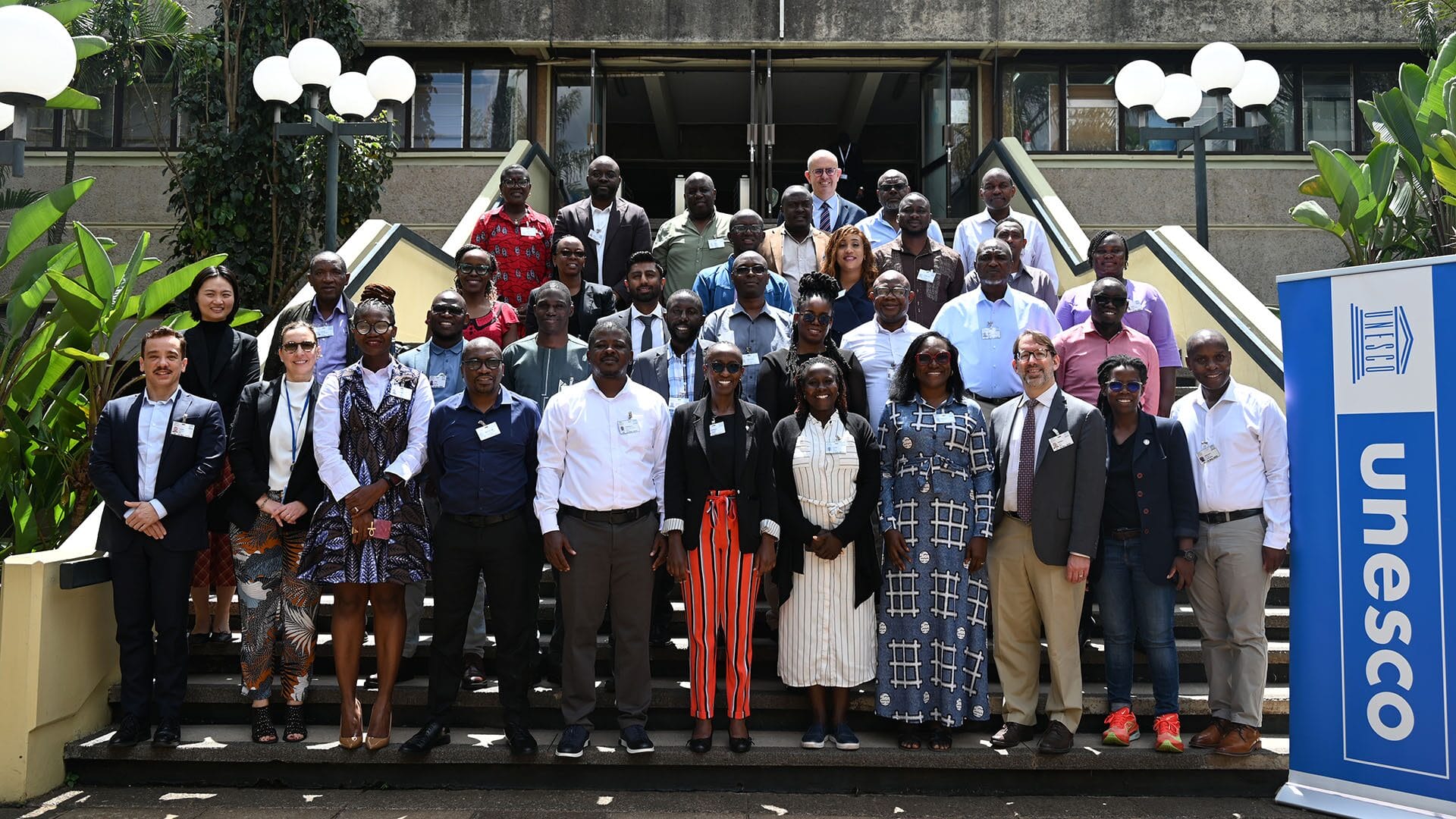
Renowned African scientific leaders, experts in bioethics and open science, policymakers, and global HCA partners came together at the United Nations Office at Nairobi, Kenya, on 15-16 December 2025. They took part in the jointly organised UNESCO-Human Cell Atlas Africa Leadership Workshop to examine how Africa can strengthen its leadership and participation in single-cell and molecular research.
This hybrid Workshop built on previous HCA Africa Regional Network meetings and the collaborative Letter of Intent signed in March 2025 by UNESCO and the HCA to help increase global capacity and ethical frameworks to deliver the benefits of genomics at a global scale.
The workshop shone a light on the exceptional genomic and population diversity of the African continent as a vital global scientific asset that is crucial to building accurate global reference resources and to avoid systemic bias in biomedical research.
Discussions aimed to shape and strengthen the contribution of African scientists and communities to global biomedical research and to the Human Cell Atlas, through open, ethical, and inclusive practices.
The participants examined scientific opportunities and constraints, governance gaps, and policy pathways for advancing an Africa-led Human Cell Atlas. The leadership workshop highlighted the importance of policies and partnerships that reinforce equitable participation in data-intensive science. Participants agreed that an African HCA must be scientist-led, diverse, and anchored in existing African institutions. They emphasised that governance and coordination needed to come before mobilising large-scale funding or political endorsement.
Professor Julie Makani, Physician Scientist, Muhimbili University of Health And Allied Sciences, Tanzania, said: ‘The strategy developed for HCA Africa will have an impact on science and science policy in Africa. HCA Africa identified established science leaders in Africa who have experience and expertise in all sciences including basic science, health science and translational science. The partnership between HCA and UNESCO will allow development and strengthening policies in science which will also guide investment in science in Africa.’
While UNESCO and the global HCA are helping to support visibility and coordination, the leadership and ownership remain with African scientists and institutions.
The workshop was designed to promote coordinated, Africa-led action within the Human Cell Atlas. As a first step, the leaders agreed to establish an initial scientist-led steering committee. This African-led committee will consolidate the African HCA community, coordinate capacity and infrastructure mapping, and guide the development of a phased Africa roadmap for 2026–2030.